Beagle Grooming: A Simple Coat, Ear and Nail Routine
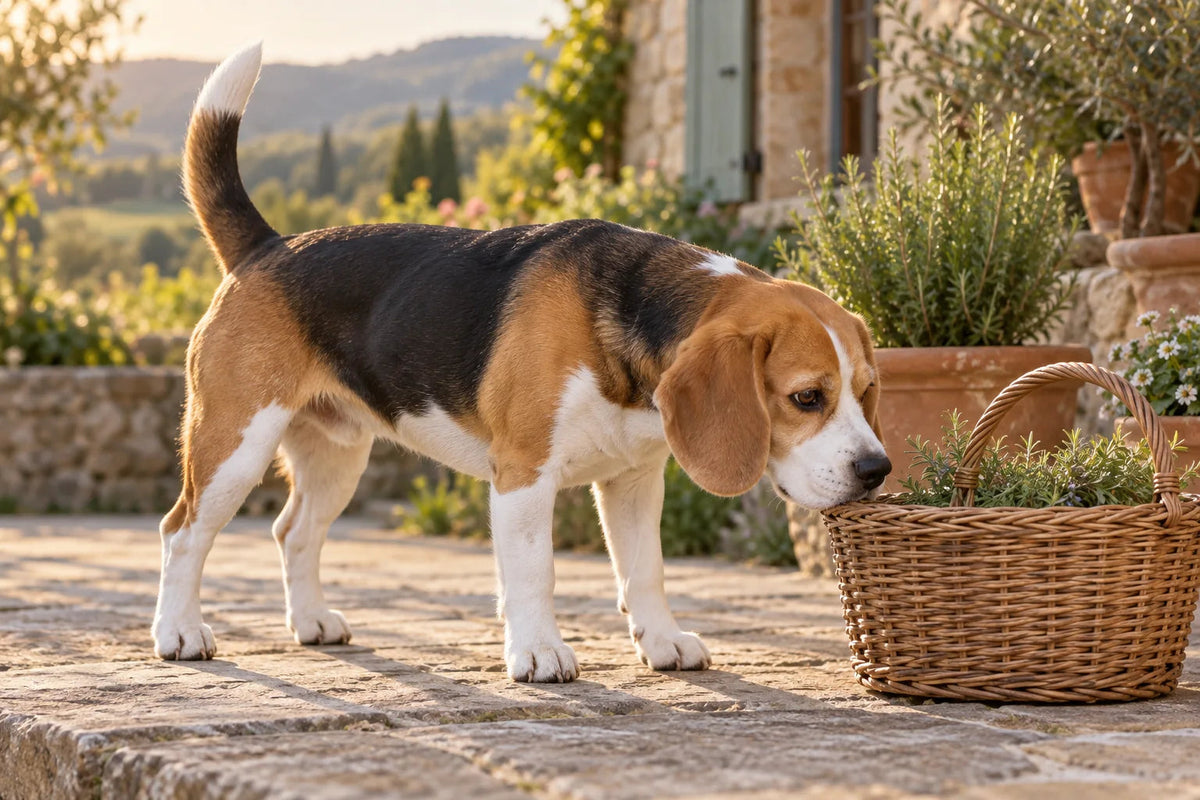
A Beagle's nose tends to lead the walk, and the rest of the dog follows through grass, mud and whatever interesting patch comes next. That makes a simple post-walk check particularly useful. You can often deal with dirt while it is still a small job instead of turning every outing into bath day.
The coat itself should stay natural. Beagle grooming is about removing loose hair, keeping feet clean and maintaining nails—not booking a short body clip.
Short hair still sheds. A gentle weekly brushing routine, adjusted during heavier shedding, is more useful than trying to remove the coat with clippers.
Understand the dense little coat
The AKC Beagle profile describes a smooth, dense double coat, with ongoing shedding and a heavier seasonal release. A soft bristle brush or suitable grooming mitt is a sensible starting tool.
You do not need to create a fluffy finish. The coat should lie close to the body, including the naturally carried tail. Do not shave the body because hair is appearing on the sofa; that changes the coat rather than addressing the ordinary grooming job.
The AKC double-coat guide specifically includes short-coated breeds such as Beagles. Short length and a single-layer coat are not the same thing.
Use a simple return-from-walk check
- Look over the chest, belly and lower legs for mud or plant debris.
- Check between the toes without forcing them widely apart.
- Look at the outside of the ears and under the collar or harness.
- Remove loose surface dirt gently; do not pull embedded or painful material.
- Rinse muddy areas if needed, then dry them.
- Clean and dry the equipment before putting it back on.
Keep this calm and predictable. A Beagle arriving home full of energy may need a moment to settle before foot handling. The goal is a comfortable check, not a contest over whether you can finish immediately.
If you find something that will not lift away easily or an area that hurts, stop and get appropriate help rather than digging or cutting.
Brush methodically instead of vigorously
Start on the shoulders and sides with light strokes following hair growth. Clear the brush or mitt as it fills. Give the hindquarters a separate pass, then use a gentler touch over the chest, belly and legs.
During heavier shedding, add shorter sessions rather than increasing pressure. The brush does not need to come away absolutely clean before you stop. Some loose hair is part of living with the coat.
Ask a groomer before adding a harsh rake or a tool with cutting edges. The useful question is whether it suits the dog's actual coat, not whether it produces an impressive pile of hair.
Make the session easy to repeat: use the same secure mat, begin with a familiar area and finish while the dog is still comfortable. A few calm minutes can achieve more than an occasional long session the dog learns to dislike.
When a full bath is worthwhile
Wash the whole dog when dirt or an unpleasant residue is spread through the coat and local cleaning is not enough. Avoid using perfume to cover the problem. If there is persistent odour despite ordinary cleaning, seek advice instead of repeatedly changing shampoos.
Brush away loose debris before the bath. Put a non-slip mat down and have towels ready. Use comfortable water and dog shampoo according to the instructions; more product is not automatically more effective.
Rinse underneath the chest and belly as carefully as over the back. Keep the spray away from the face and ear openings. Press dry with towels and check the neck and dense body hair before putting a collar back on.
Blue Cross's guidance on bathing frequency explains why activity and coat condition should determine the routine. You do not need to wash a clean Beagle simply because a fixed number of days has passed.
Notice the ears without treating them yourself
Long hanging ears deserve a quick look as part of grooming, especially after a damp or muddy outing. Clean ordinary dirt from the accessible outer surface gently and keep it dry.
Do not push cotton buds or tools into the ear canal, and do not pour in an improvised cleaning mixture. Persistent smell, discharge, redness or painful handling needs veterinary advice. Grooming is an opportunity to notice a problem, not to diagnose it.
Make nail care a regular habit
Check each nail, including dewclaws, rather than assuming walks provide enough wear. Ask a groomer to show you where the safe margin ends, especially on dark nails.
The VUNRO nail grinder can smooth a little at a time when the dog accepts its sound and vibration. Practise with the tool at a distance first, then build up to brief contact with one nail. Pause frequently and keep away from the sensitive quick.
There is no requirement to complete every nail at once. The routine is working when the dog remains comfortable, the coat is clean and dry, and small maintenance jobs do not accumulate into difficult ones.
Keep learning
More from the Blade Blog
Whippet Grooming: Gentle Coat Care and Comfortable Nails
Read the guide →
Chihuahua Grooming: Smooth Coats, Long Coats and Tiny Paws
Read the guide →