Bernedoodle Grooming: Dense Coats and Manageable Pet Trims
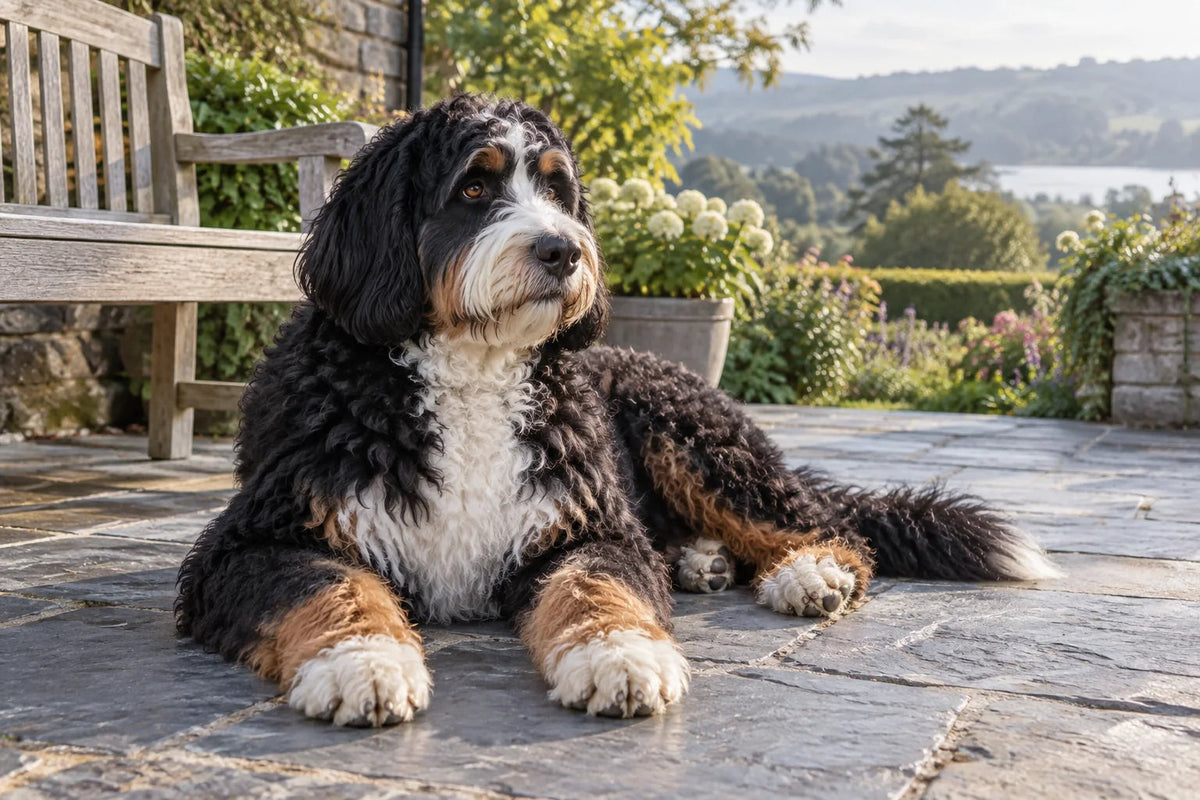
A Bernedoodle can carry a lot of coat. On a larger dog, even a straightforward brushing routine takes time, and the thick-looking outline can hide damp roots or tangles close to the body. Planning the work matters as much as choosing a haircut.
These Bernese Mountain Dog–Poodle crosses vary in size and coat. Some have looser waves, others tighter curls or a more shedding coat. A useful grooming plan begins with that individual assessment.
Divide the coat into manageable sections, but check the whole dog. The back is only one part of the job. Chest, armpits, underside, legs and the tail base need their own attention.
Find out what is underneath
PetMD's Bernedoodle care guide emphasises consistent brushing and regular professional grooming. The important practical point is that a fluffy, low-shedding appearance does not mean a low-maintenance coat.
Part the hair at several places and check how easily it separates. A thick chest, looser back and denser leg hair may need different amounts of work. Do not assume a generation label tells you the exact texture, shedding level or suitable haircut.
Ask a groomer to assess whether your dog's coat suits routine clipped pet trims or needs a different approach. A more natural, shedding Bernese-like coat should not be treated automatically as if it were Poodle hair.
Make a section plan you can actually follow
Choose a stable non-slip area with enough room for a larger dog to stand or settle comfortably. Avoid leaning across the dog or keeping a leg lifted for a long time. Work where you have a clear view and can reach without pulling the skin.
Use a simple order: shoulders and sides, chest and underside, each leg, then tail and ears. If you split the work into shorter sessions, keep track of the areas completed so that the difficult underside is not repeatedly postponed.
Short sessions should make handling easier, not allow one area to go unchecked for weeks. Adjust the schedule to how quickly the coat develops snags.
Brush in layers and verify with a comb
- Lift a small layer of hair to expose the roots of the section beneath.
- Brush gently with a tool suited to the texture, avoiding repeated scraping.
- Follow with the wider teeth of a metal comb.
- Check towards the ends without dragging the skin.
- Only use finer spacing where the section already passes comfortably.
The VUNRO combination comb can help verify larger sections after brushing. A snag is a signal to investigate. It is not permission to pull harder or saw through the hair.
Focus on the armpits, inside the rear legs, collar or harness lines, behind the ears and around the tail base. Tight, felted hair needs a groomer's assessment. Never cut beneath a mat with scissors.
Choose a length that fits the maintenance time
A large dog with a long, dense coat may require far more grooming time than its photograph suggests. Explain your realistic routine to the groomer before choosing a fuller outline. Discuss the body, legs, beard, ears and tail separately.
A practical pet trim can retain a soft face and recognisable outline without leaving every area equally long. If the inner legs repeatedly mat or the beard stays wet, those areas may need a different length from the back.
Book the next visit according to coat growth and condition, before maintenance becomes difficult. If substantial matting is already present, comfort takes priority over retaining a particular look.
Do not mistake dry ends for dry roots
Assess tangles before a routine bath and have serious matting addressed professionally first. Use dog shampoo as directed and rinse through the chest, underside and leg hair as thoroughly as the back. Protect the eyes and ears.
Blot with towels instead of rubbing the coat vigorously. If your dog tolerates a dryer, use comfortable moving airflow and check the roots in several sections. A large amount of coat can remain damp underneath after the outer hair feels dry.
For clipping, the coat must be clean, fully dry and combable. Our coat preparation guide explains the checks. Do not force a blade or attachment through resistance because a long drying session has made you want to finish quickly.
Match equipment to the agreed haircut
For an appropriate clipped pet trim, owners with safe handling experience can consider the VUNRO D-Series clipper, using D-Series blades and a suitable finished length chosen with guidance.
The VUNRO Universal Guard Comb Set fits compatible A5 and D-Series blade setups. Confirm the supporting blade before use. Guard combs set length in prepared hair; they do not remove mats or make every coat suitable for body clipping.
Include the feet in the plan
Check nails and any dewclaws regularly. A large paw covered in hair can make nail length easy to overlook. Ask for a demonstration if you cannot clearly judge what is safe to remove, and keep the foot in a natural position.
At the next appointment, explain which sections took the most time and where the comb began catching first. That information helps create a coat plan you can sustain, instead of repeatedly alternating between an unmanageable long coat and an urgent mat-removal groom.
Keep learning
More from the Blade Blog
Whippet Grooming: Gentle Coat Care and Comfortable Nails
Read the guide →
Chihuahua Grooming: Smooth Coats, Long Coats and Tiny Paws
Read the guide →