Sheepadoodle Grooming: Shaggy Coats and Practical Haircuts
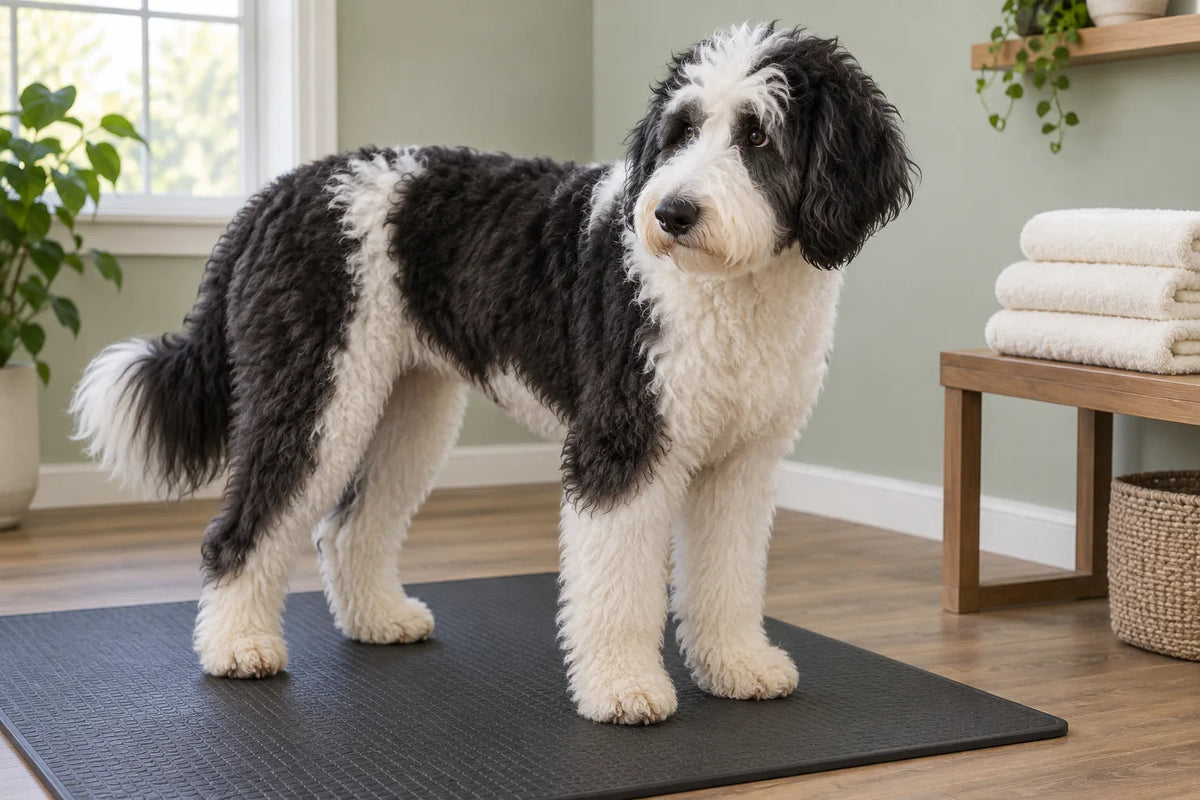
A Sheepadoodle's shaggy face and generous coat can make it easy to miss what is happening underneath. Hair may look soft and loose while the roots behind the ears or inside the legs are beginning to knot.
These Old English Sheepdog–Poodle crosses need a plan that grows with the dog. A comfortable routine learned while the puppy is small becomes especially useful when there is much more dog, and much more coat, to groom.
Keep the eyes visible and the roots checkable. A recognisable shaggy outline should not depend on hair obstructing vision or hidden mats being left until the next appointment.
Do not assume the coat will be non-shedding
PetMD's Sheepadoodle guide explains that both parent breeds have substantial grooming needs and that shedding cannot be assumed absent. Coat texture and the tendency to mat can differ between dogs.
Examine your dog's current hair rather than copying the haircut of another Sheepadoodle. Part it at the shoulder, chest and thigh, and ask a groomer to explain the density and texture you are seeing. A fuller coat requires more access to the roots, not just a bigger brush.
Our Old English Sheepdog guide covers the parent breed's demanding shaggy coat, but a crossbreed's maintenance should still be tailored to the individual.
Teach a comfortable grooming position
Start on a secure non-slip surface. Reward brief, calm handling of shoulders, feet and ears, then build gradually. Allow the dog to change position naturally rather than holding a large body or limb in an awkward stretch.
Introduce brush contact, dryer sound and nail tools in short steps. Familiarity is easier to build before a long coat requires a long session. If the dog is distressed, stop and ask the groomer for a gentler training plan rather than forcing completion.
For larger dogs, organise the work by sections so you can reach clearly. If you split grooming into sessions, note what you have completed. The underside should not be the part that is always left for another day.
Separate layers and check with a comb
- Lift a thin layer of hair so you can see the roots of the section below.
- Brush gently with a tool suited to the coat.
- Follow with a metal comb, using wider teeth first.
- Move through the section without pulling the skin.
- Use finer spacing only where the hair already passes freely.
The VUNRO combination comb helps verify the result after brushing. It is not a mat-removal shortcut. Stop at tight resistance and have felted hair assessed professionally; never cut beneath a mat with scissors.
Look behind the ears, along harness lines, beneath the chest, in the armpits and inside the rear legs. Tail-base hair and longer feet deserve a check too. Smooth hair down the back is not proof that these areas are clear.
Keep a clear view through the shaggy face
Ask for a face trim that leaves the eyes visibly clear without requiring you to cut close to them at home. A rounded or shaggy style can still be practical, with manageable beard and cheek hair.
Gently wipe ordinary food residue from the beard and dry damp ends. Avoid household stain-removing mixtures around the face. If the skin or eyes appear uncomfortable, stop treating it as a cosmetic grooming problem and seek appropriate advice.
Ear hair can tangle where it meets the head. Support the ear gently during external coat checks and avoid scraping along its thin edge. Do not insert grooming tools or cotton buds into the canal.
Choose a pet trim you can maintain
A fuller body coat may look appealing, but it should remain comfortable and combable throughout the weeks between visits. Explain how much maintenance time you have and which areas become difficult first.
Agree the body, legs, underside, ears and face separately. A practical pet trim can reduce the workload while retaining a soft, characteristic outline. Coat condition and the dog's comfort should determine what can safely be kept when matting is already established.
For an appropriate clipped trim, owners with safe handling experience can consider the VUNRO D-Series clipper, using D-Series blades and a suitable finished length chosen with guidance. The tool does not replace preparation or training around sensitive areas.
Prepare and dry the roots thoroughly
Assess tangles before an ordinary bath and seek help with substantial matting first. Use dog shampoo as directed, rinse through dense sections and protect the eyes and ears. Blot water out with towels rather than rubbing the hair into knots.
Use comfortable moving airflow if tolerated and check at the roots beneath the chest and through thicker leg hair. Dry outer fluff can hide moisture underneath. Before clipping, the coat should be clean, fully dry and combable; our coat preparation guide explains the sequence.
Keep feet and follow-up in the routine
Inspect nails and any dewclaws regularly. Long hair can disguise their length, so do not judge nail condition from the outline of a fluffy foot. Ask for a demonstration if you cannot confidently see what is safe to remove.
Tell the groomer which sections stayed easy and which tangled again. Use that feedback to adjust length and appointment timing before the coat becomes hard to manage. A successful Sheepadoodle groom should make daily care kinder and more predictable.
Keep learning
More from the Blade Blog
Whippet Grooming: Gentle Coat Care and Comfortable Nails
Read the guide →
Chihuahua Grooming: Smooth Coats, Long Coats and Tiny Paws
Read the guide →